


 68 / 136

AfroCentric INTEGRATED ANNUAL REPORT 2016
66
MEDSCHEME SOUTH AFRICA (continued)
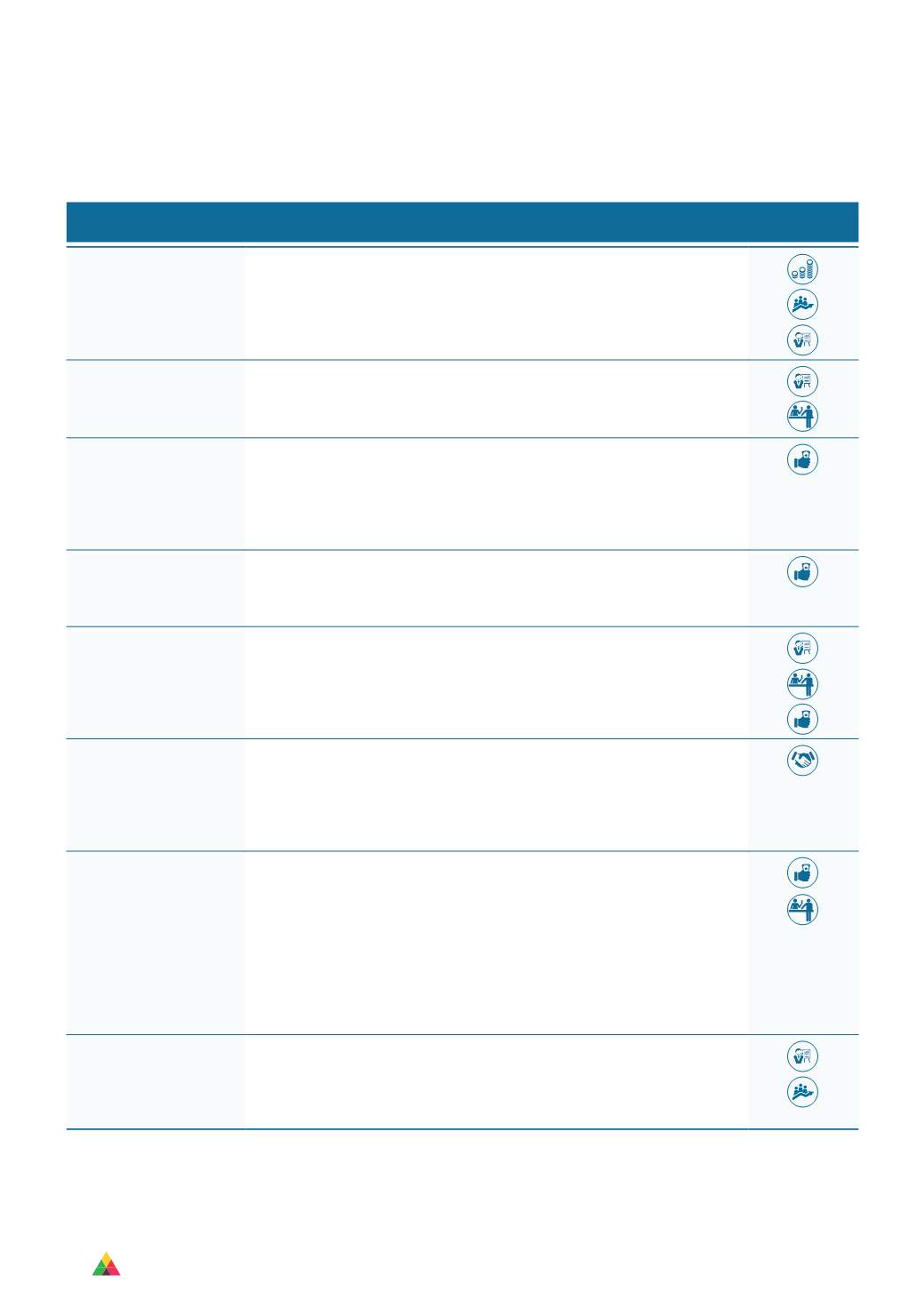
The strategy is operationalised via eight strategic focus areas:
Strategic focus areas
Why this is important
Link to Group
strategy
Growth in South Africa,
Africa and international
markets
Membership growth of existing schemes is far less and in some cases reversing,
as younger members opt for cheaper, reduced-cover options or exit the
schemes altogether. Medscheme must gain new business, outright and through
amalgamation of smaller schemes. International opportunities can enhance
the growth trajectory with the South African market experiencing pressure on
margins and stagnation.
Client retention
Client retention is critical for sustainability. Investment in business processes,
unique to each scheme, needs to be maximised for optimal client service
delivery and shareholder value. Existing clients, with brand-loyal members,
provide a rich cross-selling opportunity for new products (i.e. Sanlam).
Cost consciousness
Reducing the cost of doing business, through re-engineered business processes
and automation, contributes to containing and driving down healthcare costs,
the vision of the Group and Medscheme. Effective cost management, internally
and in the healthcare market through managed care solutions, keeps clients
satisfied that they are receiving an efficient service (aiding client retention) thus
reducing scheme membership attrition.
Fraud, waste and abuse
Fraud, waste and abuse in the medical scheme environment is a critical matter
and a source of escalating costs. The Insurance Fraud Manager system from
FICO will identify aberrant claims and unusual claim trends to enable client
schemes to address this matter.
Drive innovation through
technology
Technology is the backbone of the business and represents a high fixed cost.
Technological innovation can reduce costs and improve the overall customer
experience. An example would be interactive devices and communication
channels. The enhanced Fusion IT platform will be more flexible and
customisable, allowing greater tailoring of the service offering to each client
scheme.
Employee retention and
attraction
Critical skills in the business are in short supply in the country, and there is
tough competition for them within the healthcare market, and between private
and public sectors. This competition drives up remuneration costs, particularly
for skilled employees such as actuaries and professionals with scarce skills
such as pharmacists. Employees are also part of the intellectual property of
Medscheme, a repository of institutional knowledge that is critical to preserve.
Population health
management/health risk
management solutions
Alternative reimbursement models offer a mechanism to address challenges
within the healthcare system which is currently fragmented and inefficient.
Medscheme’s predictive modelling and data analytics capabilities allow
for the identification of both high-risk beneficiaries and the profiling of
healthcare service providers. High risk beneficiaries are cared for by a team
of care managers. This controls the cost and provides more compassionate
customer care. Provider relationship and management team use profiling in
their engagement with healthcare professionals and to guide the creation of
preferred provider arrangements. Effectiveness is measured in terms of clinical
outcomes, cost reduction and behavioural changes.
Optimisation of
partnerships
Our partnership with Sanlam creates opportunities to enter the financial services
market, and to cross-sell core products to a broader customer database. Sanlam
has a strong presence in other African countries and represents opportunities
for geographical expansion and extension of product range. This contributes to
diversification of revenue sources and growth ambitions for the Group.