


 40 / 136

AfroCentric INTEGRATED ANNUAL REPORT 2016
38
BUSINESS MODEL
The Group’s business model explains how value is created for stakeholders and depicts the capital inputs required to
effectively provide health administration and health risk management in the context of the external environment, and in
response to stakeholders’ needs.
The business model depicts how the businesses transforms inputs, through business activities and operations, into outputs and
outcomes.
These elements inform the material risks and opportunities and are considered when developing an effective strategy.
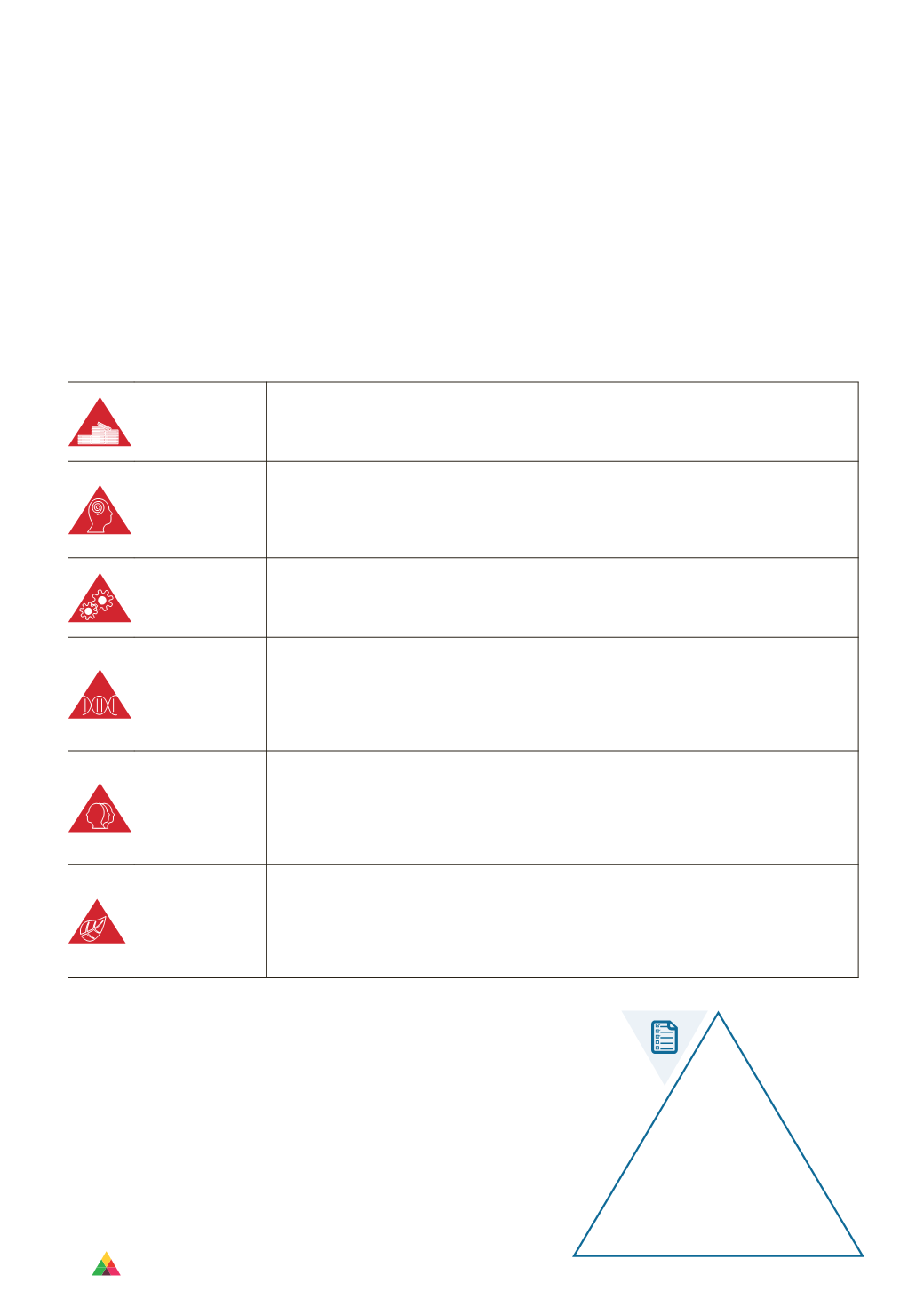
SIX CAPITALS
AfroCentric relies on a range of capital inputs that are transformed through its activities to create value, as outlined below.
FINANCIAL
CAPITAL
The Group obtains the funds required for executing the strategy through earning returns
on investments and re-investment of earnings generated from services. Increasing the
service fees base enables the Group to increase financial capital and create value for our
stakeholders.
INTELLECTUAL
CAPITAL
Intellectual capital consists of employee intellectual property including systems and
processes, uniquely tailored IT systems, licences (such as the licence for back treatment in
South Africa) and business and industry knowledge. The Group continually aims to increase
its intellectual capital through streamlining operations and investing in improvements to
ensure efficiencies.
MANUFACTURED
CAPITAL
Manufactured capital is the physical objects that AfroCentric requires to provide services
and include IT and call centre equipment amongst others. An example of manufactured
capital is the Fusion IT system, designed to enhance security and efficiency of data
management.
HUMAN
CAPITAL
Human capital is the capabilities and experience of employees on which AfroCentric relies.
We have a skilled workforce across a range of key competencies related to the industry
and who provide services from call centres and operations to administration and actuarial
analysis. The Group continually aims to increase human capital through recruitment
practices, skills and talent programmes. AfroCentric has its own learning academy to upskill
and empower employees.
SOCIAL AND
RELATIONSHIP
CAPITAL
The AfroCentric Group is invested in South Africa with the purpose of promoting a rational
healthcare delivery system that focuses on quality while controlling unsustainable medical
inflation, improving people’s lives and the quality of care. This is achieved through investing
in relationships with stakeholders brands in which it is invested. The Group is committed to
transformation, and providing a meaningful contribution to uplift the communities in which
it operates and to the South African nation as a whole.
NATURAL
CAPITAL
The AfroCentric Group does not have a significant environmental footprint. We rely on
environmental resources and processes, such as water and electricity, to provide services
rendered. The recent energy crisis and load shedding increased our environmental impact
as a result of diesel generators being utilised. The Group is committed to sound corporate
citizenship and monitors and measures its greenhouse gas (“GHG”) footprint, considering
that carbon tax legislation may have a financial implication.
STRATEGY (continued)
For further detail
on investment in
employees, refer to
page 101.
For further details on corporate
social investment, transformation
and B-BBEE, refer to page 94.
Refer to governance and sustainability
on page 79 for more information.