



 112 / 146

AFROCENTRIC GROUP
108
GOVERNANCE
OUR SOCIAL IMPACT CONTINUED
The Ownership profile of AHL (as at July 2017)
Black exercisable voting rights that flow through to Afrocentric Health Ltd
34.51%
Black exercisable voting rights by black women
13.46%
Black entitlement to economic interest that flows through to Afrocentric Health Ltd
34.51%
Entitlement to economic interest by black women
13.46%
Economic interest that flows through to black designated groups
13.79%
Involvement of ownership of the Enterprise of black new entrant.
13.57%
The 40% sub-minimum for equity value has been met.
MANAGEMENT CONTROL
• Our Board of Directors has more than 63.64% black
representation.
• Voting rights in the hands of black people stands at
63.64%, of which 27.27% are black females.
• The senior management reporting to the Board, comprises
50% black people, with 16.67% being female.
• Black Executive Directors are 57.14%.
• Black women Executive Directors are 28.57%.
0
5
10
15
20
25
30
2017
2016
2015
2014
29
19.09
19
13.7
19
13.41
19
14.20*
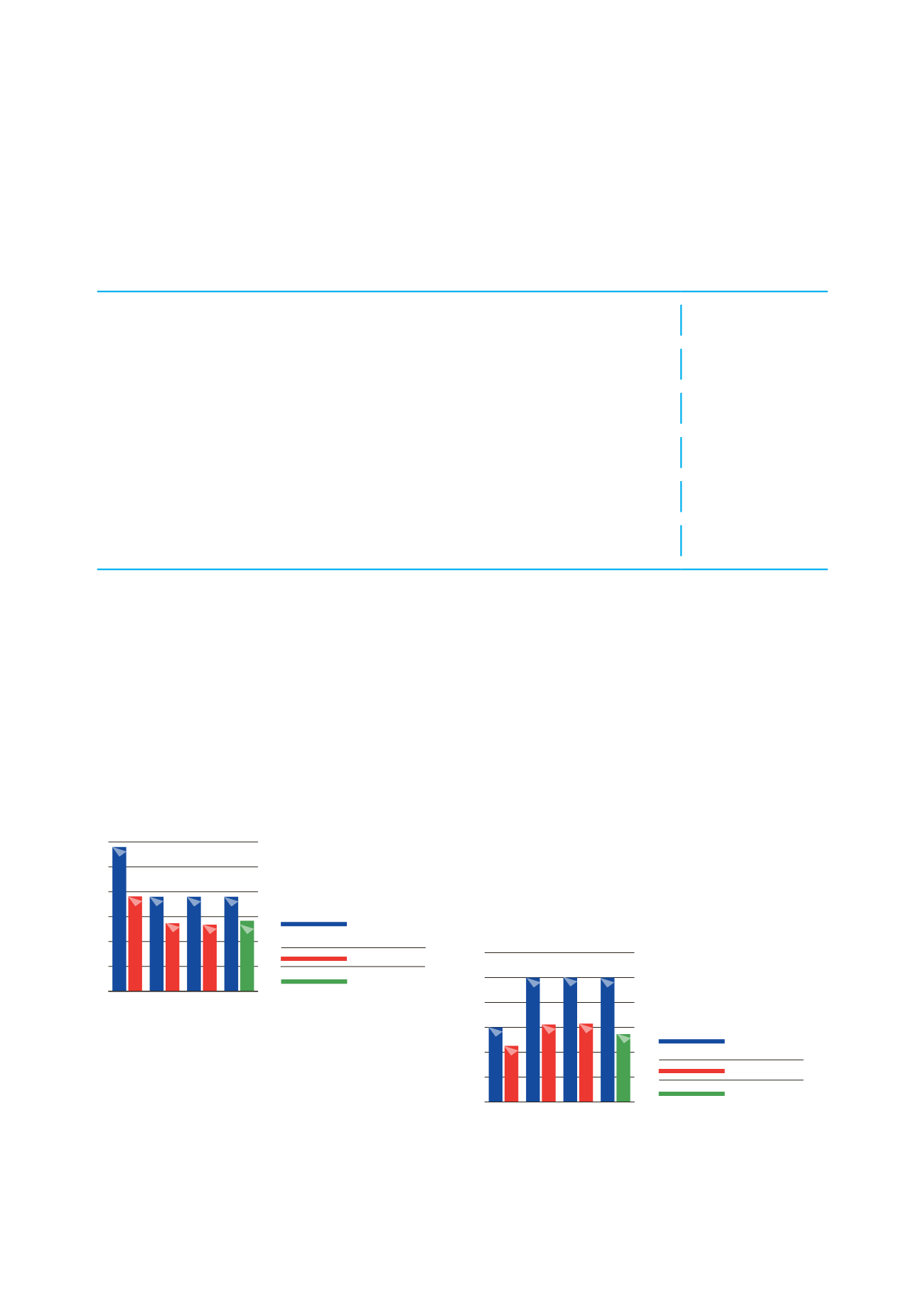
MANAGEMENT CONTROL (POINTS)
Maximum points
available “old codes
vs new codes”
AHL score
2017 indicative
score
* Group-projected FY 2017 indicative score.
A total of 13.41 out of the available 19 points (including the
bonus point) were achieved for this element.
EE is driven as part of compliance with the EE Act and
this involves compiling a five-year plan, setting quantifiable
targets for each race, gender and employment category.
Progress is measured and reported annually to the Department
of Labour.
A universal target is set for compliance with the EE target under
the B-BBEE Codes, which is different from the targets the
Company has for set itself under the EE Plan. The Company
uses these targets to measure its EE performance for the EE
element under the BEE Codes.
This element further measures the representation of black
disabled in the Company’s total employee population.
SKILLS DEVELOPMENT
Skills development measures the investment in training and
development of black employees as a percentage of the
company’s total payroll. This is different to how the training
is measured and recorded for the Employment Equity
requirements (the latter only measuring the number of people
that attended training vs. how much was spent).
0
5
10
15
20
25
30
2017
2016
2015
2014
15
11.27
25
15.55
25
15.75
25
13.64
SKILLS DEVELOPMENT (POINTS)
Maximum points
available “old codes
vs new codes”
AHL score
2017 indicative
score
We have implemented internship and trainee programmes with
accredited INSETA providers, which are designed to comply
with the requirements of our sector, and provide accelerated