|


Currently viewing: Corporate Governance / Next: King III Gap Analysis Corporate GovernanceApproach to Governance Philosophy AfroCentric Investment Corporation Limited (“AfroCentric”) is a diversified, investment holding group that is committed to sound corporate governance and compliance with regulations and governance principles. Corporate governance guides the Directors, management and operations of the Group to instil a culture of responsibility, accountability, integrity, ethics and respect. Responsibility The Board of Directors is at all times aware of the importance of sound corporate governance and the correlation between sound corporate governance and profitability. The Board is of the opinion that the Group complied in all material respects with the provisions of the King Code of Governance Principles (“King III”), the Companies Act and the corporate governance provisions in the JSE Listings Requirements during the year under review and where full compliance has not been achieved, these have been disclosed in this report as required.
Governance events during the period Board of Directors: The Board has appointed Garth Napier as the Lead Independent Non-Executive Director of AfroCentric Investment Corporation Limited in accordance with the King III Code of Good Corporate Governance. Garth is available to shareholders who have concerns that cannot be addressed through the Chairman. As Lead Independent Director, he also provides a sounding board for the Chairman and serves as an intermediary for other Directors if necessary. Company Secretary: Wilbert Mhlanga has been appointed as the Company Secretary for AfroCentric Investment Corporation Limited with effect from 1 March 2014. Audit Committee: During the year under review, a formalised Audit Committee Charter was reviewed and was approved by the Audit Committee. The Board Board of Directors The Directors aim to be transparent, impartial and independent when performing the duties of a Director. The Board’s roles and responsibilities are formally documented in its Charter. The AfroCentric Board Charter is aligned to the key principles of King III, the Companies Act, 2008 and the revised Memorandum of Incorporation (“MOI”) of the Company. Operational responsibility for the Group’s subsidiary companies has been delegated to the individual Boards which are accountable for the ongoing management of those businesses. The Board exercises leadership and judgement in directing the Group to achieve sustainable growth and to act in the best interest of the Group and its stakeholders. The Board Charter clearly sets out the Board’s objectives, role and composition, and defines practices relating to leadership, induction, remuneration, meetings, share dealings, communication, internal audit, code of ethics as well as evaluation and performance. Board Charter A formal Board Charter defines the roles and responsibilities as follows:
Board composition The Board consists of 10 Directors with a split between two Executive salaried Directors and eight Non-Executives. Of the eight Non-Executives, two are independent. The Board has appointed Mr Garth Napier as the Lead Independent Non-Executive Director on 2 July 2014. The recommendation in terms of King III and the JSE Listings Requirements is that the majority of Non-Executive Directors be independent and therefore the Board is partially compliant. Due to majority of Directors being Non-Executive Directors measures are in place to increase the number of Independent Non-Executive Directors to be aligned to the governance requirements. The Board has therefore undertaken additional steps by appointing a Lead Independent Non-Executive Director as the current Chairman is a Non-Executive Director. The Board is satisfied that each Non-Executive Director plays a key role in the functioning of the Group and has highly sought after insight of the industry in which the Group trades. On this basis, the Board is of the opinion that the collective knowledge, expertise and experience of these Non-Executive Directors is in the best interest of all stakeholders and that the Non- Executive Directors have the necessary skills and expertise to act in an independent manner that is in the best interests of the Company. Each Director plays a key role in the functioning of the Group and has highly sought after experience and knowledge of the industry in which AfroCentric trades. The Directors provide the objectivity and a range of skills and experience necessary for the Board to function effectively. Risk and Transformation Committees don’t operate at the Company level. The Board instead relies on the sub-Committees of AfroCentric Health Limited (“AHL”), the majority subsidiary with a 94.1% shareholding, and entrusts them to function and operate as intended whilst updating the Board as to any material matters.
As required by King III and the JSE Listings Requirements, the roles of the Chairperson and CEO are separate and clearly defined. The Chairperson is a Non-Executive Director but is not independent as recommended by King III and the JSE Listings Requirements. A Lead Independent Non-Executive Director has been appointed in compliance with King III and the JSE Listings Requirements. The Board is of the opinion that the Chairperson has the necessary experience and expertise to act in an independent manner that is in the best interest of the Company. The Chairperson has a clear division of her role and responsibilities.
Demographics The Board consists of 10 Directors with a split between two Executive salaried Directors and eight Non-Executives. Of the eight Non-Executives, two are independent. The Board has appointed Mr Garth Napier as a Lead Independent Non-Executive Director on 2 July 2014.
Directors' Independence The recommendation in terms of King III and the JSE Listings Requirements is that the majority of Non-Executive Directors be independent. Although the Board is only partially compliant in this regard, the determination is that each Non-Executive Director plays a key role in the functioning of the Group and has highly sought after insight of the industry in which the Group trades. On this basis, the Board is of the opinion that the collective knowledge, expertise and experience of these Non-Executive Directors is in the best interest of all stakeholders and that the Non- Executive Directors have the necessary skills and expertise to act in an independent manner that is in the best interests of the Company. The Directors provide the objectivity and range of skills and experience necessary for the Board to function effectively. As required by King III and the JSE Listings Requirements, the roles of the Chairperson and CEO are separate and clearly defined. The Chairperson is a Non-Executive Director but is not independent. However, the Board is of the opinion that the Chairperson has the necessary experience and expertise to act in an independent manner that is in the best interest of the Company. The Chairperson has a clear division of her role and responsibilities. A Lead Independent Non-Executive Director has recently been appointed to meet the requirements of both King III and the JSE Listings requirements. Responsibilities of the Chairperson The Chairperson ensures that no single individual has unfettered powers of decision-making and authority, thus ensuring that stakeholder interests are protected. Per the Board Charter, the primary function of the Chairperson is to preside over meetings and to ensure the proper functioning of the Board. In addition the Chairperson has the following responsibilities:
Board evaluation and performance AfroCentric undertakes annual Board and Board Committee evaluations, including individual evaluations of the Chairperson and each Director, as recommended by King III. The Board is of the opinion that the Chairperson has the necessary experience and expertise to act in an independent manner that is in the best interests of the Group. The Directors are recognised as having unique expertise and prestigious standing in South African business, and the Company is confident that its Directors have the necessary expertise and experience to fulfil their duties and responsibilities. The Directors receive training and development, when required. The independence of long-serving Non-Executive Directors is informally assessed on an annual basis by the Board. The Board concluded that these Directors remain correctly categorised as independent. A formal evaluation questionnaire has been developed for all Directors and is in the process of being implemented, in order to assess performance and independence, if relevant. Election and rotation of Directors Directors are appointed by the Board in a formal and transparent manner. The Remuneration and Nominations Committee considers suitable candidates and nominates persons for appointment as Directors to the Board. Non-Executive Directors are selected based on their skills, business experience and qualifications, while gender and racial diversity are also considered in appointing new Directors. An induction programme exists for newly appointed Directors to familiarise themselves with the Group’s operations, structure, sustainability and business environment. The programme also outlines the fiduciary and statutory duties to be performed by the Director. One-third of the Directors are required to retire by rotation at the AGM of shareholders, although they may offer themselves for re-election. Directors appointed during the period are required to have their appointments ratified at the following AGM. Directors have no fixed term of appointment and no retirement age has been fixed. Board meetings The Board Charter requires the Board to meet no less than four times a year and additional meetings are convened when necessary. All Board meetings are convened by formal notice and supporting documentation is distributed to all Directors at least five working days before Board meetings to allow for adequate preparation, and to facilitate more relevant discussion at these meetings. The Board is entitled to execute Board business, where appropriate, via round robin resolution, to ensure continuity in the Board's relationship with the Company. Six Directors constitute a quorum at Board meetings, provided that a majority of the Directors present are Non- Executive. Decisions taken at Board meetings are decided by a majority of votes, with each Director having one vote. Directors have full access to all Group information and are entitled to obtain independent professional advice at the Group’s expense, after consulting with the Chairman. Directors also have direct access to management and may meet with management. Meeting attendance
Conflicts of interests Directors are required to declare their personal financial interests, and those of related persons, annually, in terms of the Companies Act and the MOI. Directors are required to declare their personal financial interests, and those of related persons, annually, in terms of the Companies Act and the MOI. Based on these declarations, no Directors had a material interest in any transaction with the Group during the financial period, other than the interests disclosed in Note 39.2 of the annual financial statements and shareholding as per the shareholders’ analysis on pages 119 to 120. Dealings in securities The Company Secretary annually advises Directors of the relevant provisions of the Financial Markets Act 19 of 2012 and the JSE Listings Requirements regarding the prohibitions regarding dealing in the Company’s shares or encouraging dealing by others, while in possession of non-public, price-sensitive information, or disclosing this information. Directors are prohibited from dealing in the Group’s shares during two formal closed periods. The closed periods commence approximately two weeks before the end of the interim (December) and annual (June) financial periods and end 24 hours after the financial results are disclosed on the JSE’s news service, SENS. Restrictions may also be placed on share dealings at any other time if Directors have access to price-sensitive information which is not in the public domain. All share dealings by Directors, Executives, the Company Secretary and any designated persons in possession of price-sensitive information, require prior written approval. In terms of the JSE Listings Requirements, the Company Secretary is advised of the share dealings by the Directors and notifies the JSE and the investment community through SENS within 48 hours of the trade being effected. Company Secretary On 3 June 2013 the independent company, Statucor (Pty) Ltd, was appointed to provide the services of the Company Secretary and resigned on 28 February 2014. Wilbert Mhlanga was appointed the Company Secretary on 01 March 2014. Wilbert is a Fellow Member of the Institute of Chartered Secretaries and Administrators and a Member of the Institute of Directors. The Directors have direct access to the Company Secretary, who provides guidance to the Board as a whole and to individual Directors with regards to how their responsibilities should be discharged. The Company Secretary is responsible for the induction of new Directors and the ongoing training of all Directors. Assistance is provided to the Chairman and CEO in setting the annual Board plan and Board agendas as well as in formulating governance and Board-related issues. The Board has performed an assessment, conducted by the Chairman, and is of the opinion that the Company Secretary has the required competence, knowledge and experience to carry out the duties and responsibilities and is suitably independent of the Board. Board committees The AfroCentric Board takes cognisance of the fact that it is ultimately accountable and responsible for the performance and affairs of the Group. The Board delegated certain authorities to the Board Committees in order to manage the affairs of the Board, but this in no way absolves the Board, and its Directors, from the obligation to carry out their fiduciary duties and responsibilities. All Board Committees operate under written terms of reference (the Charter) which is approved by the Board. Each quarter, all committee chairpersons report to the Board, either with a written report or verbally, on recent committee activities. Board committees are permitted to receive independent, professional advice, as and when deemed necessary. There is full disclosure and transparency from these committees to the Board. The Audit Committee has an independent role from management and is accountable directly to the Board and the members collectively possess the knowledge and experience necessary to diligently execute their responsibilities. The committee comprises two Independent Non-Executive Directors, one of whom is the Chairperson, and one Non-Executive Director. The Board will be appointing an Independent Non-Executive Director to the Audit Committee in order to fully comply with governance requirements of at least three Independent Non-Executive Directors. The Audit Committee Charter outlines the purpose and responsibilities as:
Meeting attendance The Audit Committee meets on an ad hoc basis as required, but at least twice a year
Risk Committee Through the Risk Committee the Board is able to guide efforts aimed at meeting risk management expectations and requirements. Together with the Company’s Risk Manager, review any and all risks that could have a significant impact on the Company’s business; The committee comprises two Independent Non-Executive Directors, one of whom is the Chairperson, and two Executive Directors. King III and the Companies Act require that the Committee comprises majority Independent Non-Executive Directors including the Chairperson. At this time the Group does not comply with these requirements and accepts the composition of the committee. The Risk Committee exists only at the AfroCentric Health level as this is where the management of risks is required for the operating activities of the Group. Any significant risks identified by the AHL Risk Committee are escalated to the ACT Audit Committee. The Risk Committee Charter sets out the following duties and responsibilities:
The AHL Risk Committee meets on an ad hoc basis as required, but at least twice a year
Remuneration and Nominations Committee The Remuneration and Nominations Committee is mandated with oversight regarding new Board appointments and developing policy on remuneration. The committee comprises three Non-Executive Directors, one of whom is the Chairperson. The composition of the committee is required to be a majority of Independent Non-Executive Directors. The Group does not comply with these requirements and, for the time being, accepts the composition of the committee. In terms of its Charter, the committee is tasked with developing a formal process for reviewing the balance and effectiveness of the Board, identifying the skills needed, and those individuals that might provide such skill, in a fair and thorough manner, thus ensuring that the Board remains effective and focused. It is also called upon to develop a policy on Executive remuneration and for determining the remuneration packages of individual Directors and senior management. The committee should have access to independent surveys and consultants. The financial reward offered by a company should be sufficient to attract people of the required calibre. Remuneration
Nominations
Additional
Meeting attendance The Remuneration Committee meets on an ad hoc basis as required, but at least twice a year.
Investment Committee The committee comprises three Non-Executive Directors, one of whom is the Chairperson. The Investment Committee meets on an ad hoc basis as required. During the year under review the committee held regular, informal meetings. The duties and responsibilities of the Investment Committee include:
No material acquisitions satisfied the investment criteria of the committee, during the period under review, and thus none were approved. The Investment Committee meets on an ad hoc basis as required, but at least twice a year.
Transformation Committee The Transformation Committee exists only at the AfroCentric Health level as this is where the management of transformation and BEE is required for the operating activities of the Group. The committee comprises one Independent Non-Executive Director and eight Executive Directors. The Chairperson is Y Motsisi, Executive Director, Medscheme Holdings, Branding and Communication, who has resigned effective 30 June 2014. A new chairperson will be appointed accordingly. The Transformation Committee is responsible for driving transformation and BEE compliance across the Group:
Social and Ethics Committee The Social and Ethics Committee is constituted as a Statutory Committee in terms of the Companies Act and as approved by the Board. The committee comprises two Independent Non-Executive Directors, one of whom is the Chairperson, and one Non-Executive Director. The Social and Ethics Committee is mandated with: Monitor the Company’s activities, having regard to relevant legislation, codes of practice, and with regard to matters relating to:
Meeting attendance
Internal Audit
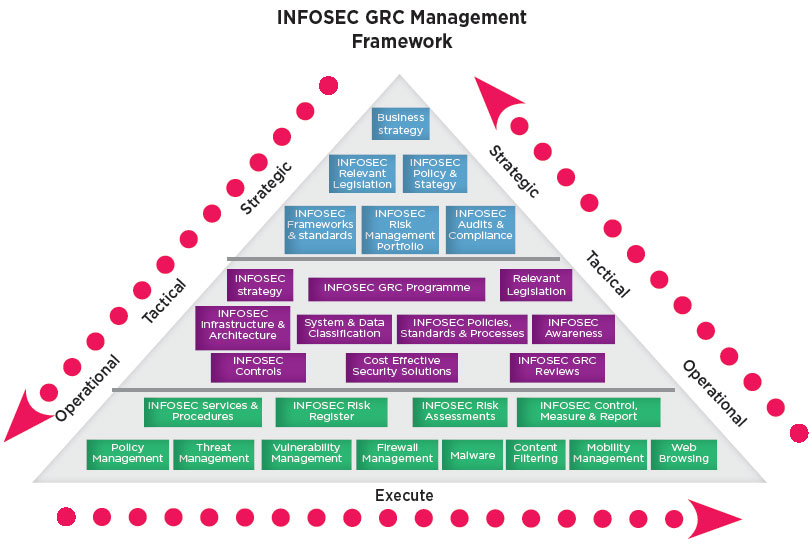
Information security and governance Information Security (“Infosec”) Governance, Risk and Compliance (“GRC”) management Within the ACT Group, the AHL Information Security Policy regulates the governance of all our clients’ information which is supported by the AHL Enterprise Risk Management Policy and Framework which deals with risks and opportunities affecting value creation or preservation and is defined as follows with reference to COSO (“the Committee of Sponsoring Organisations of the Treadway Commission”): “Enterprise Risk Management is a process, effected by an entity’s board of directors, management and personnel, applied in strategy setting and across the operations of the enterprise, designed to identify potential events that may affect the entity, and manage risk to be within its risk appetite, to provide reasonable assurance regarding the achievement of entity objectives.” The Group’s IT subsidiary, Helios IT Solutions, follows a three tier risk-based approach as depicted in the diagram below to ensure that Information Security is properly governed and aligned to support business requirements for IT governance, risk management, service delivery and compliance. Strategic level: Sufficient direction at a strategic level to reduce the likelihood and impact of harm caused to the business as a result of a loss of confidentiality, integrity or availability of information. Management level: IT Risk Management is an interactive and collaborative process which contributes to the improvement of IT security controls across the AfroCentric Group. Technical level: Implementation and maintenance of IT operational and technical security controls that are required to protect the IT infrastructure and the information residing on information assets throughout the life cycle of an IT system and/or application to manage any possible risks. The responsibility for the assurance of the effectiveness of the controls in place to govern the security of information within the AHL Group exists within the portfolios of the Audit Committee and the Risk Committee portfolios.
|







|
|
|


| AFROCENTRIC INTEGRATED ANNUAL REPORT 2014 |