|


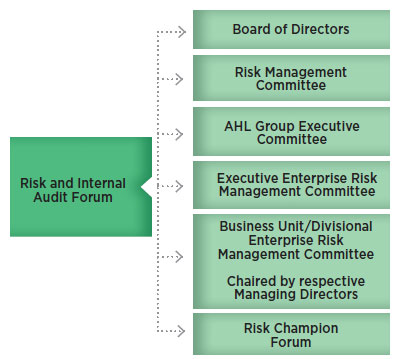
Currently viewing: Risk measurement and management / Next: Corporate Governance OUR Risk MANAGEMENTAfroCentric Group, like all entities, faces uncertainty and the challenge for management is to determine how much uncertainty to accept, as it strives to grow shareholder value. Uncertainty presents both risk and opportunity, with the potential to erode or enhance value. Enterprise Risk Management enables management to effectively deal with uncertainty and associated risk and opportunity, enhancing the capacity to build value. AfroCentric’s value is maximised when management sets objectives to strike an optimal balance between growth and related risks, and effectively deploys resources in pursuit of the entity’s objectives. Enterprise Risk Management is described as a formal response to corporate risk in the Institute of Risk Management of South Africa ("IRMSA") Code of Practice. It is considered to be a structured and systematic process that is interwoven into existing management responsibilities. Our Enterprise Risk Management process AfroCentric’s structured risk management process, which is aligned to industry standards, is detailed below:
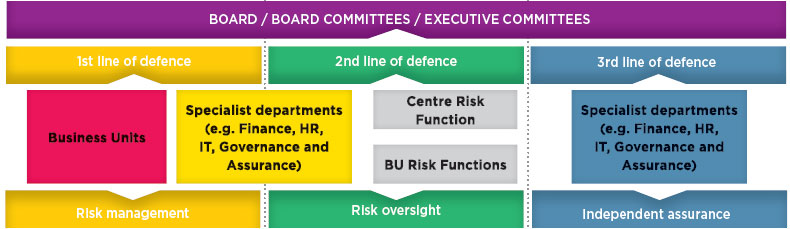
The three lines of defence governance model AfroCentric adopts the use of the ‘three lines of defence’ governance model as a key principle of risk management. The three lines of defence model is designed to promote risk ownership, transparency, accountability and consistency within the risk governance process through the clear identification and segregation of roles. Line 1 The ‘first line of defence’ consists of the day-to-day management and operation of the business and requires that line management within the business have primary 'first line' responsibility for managing, monitoring and assessing risk. Line 2 The ‘second line of defence’ – provided by the Risk Function and other specialist functions – develops appropriate risk management framework, facilitates and monitors the implementation of effective risk management practices by the first line and assists the risk owners in defining the target risk exposure and reporting adequate risk-related information in the Group. Note that many specialist functions (e.g. HR, IT, Compliance) have both operational and policy-setting roles, and so straddle both first and second lines of defence. The second line of defence, when assisting/ advising the first line of defence, should not:
Line 3 The ‘third line of defence’ provides independent assurance on the risk management and business processes in the first and second lines. This includes evaluating whether the financial statements of AfroCentric and its subsidiaries comply with the relevant statutory and regulatory requirements, assessing the extent to which risk management and governance practices are effective and assessing whether the systems of control are functioning as intended.
OUR KEY RELATIONSHIPS How we engage with our stakeholders Stakeholder engagement Whilst all stakeholder relationships are important to our business, the following stakeholders are considered the most material and relevant and thus form the basis for the Group’s Integrated reporting framework and the material issues to be reported on. These stakeholders have been identified by management and are engaged with on an ongoing basis as described further.
Shareholders are our valued partners in business who have invested in the Group for its sustainable future. The Group’s major shareholders are actively involved on the Board of Directors and they provide a wealth of knowledge gained over many years of experience in business and industry. The information distributed by the Group to the market and shareholders via our various communication methods allows us to keep our shareholders up to date and also provides the contacts and encouragement for feedback from our shareholders. Information in this Integrated Annual Report: An understanding of our business and the ongoing, successful performance of the Group, as well the sustainability measures in place, have been reported throughout the Integrated Annual Report. Methods of communication: Company websites, meetings, SENS, AGM, Annual Report, announcements, analyst meetings on request and a dedicated investor relations function. Customers Our customers are pivotal to our sustainability as they provide the cash flow and means for business growth and profit generation. All companies within the Group are focused on our customers and their relationship management by engaging with them consistently and with dedication. Various methods of engagement are used to ensure that our customers receive quality service and the level of satisfaction that they need. Information in this Integrated Annual Report: The products and services available, Group structure, an understanding of our business and successful performance, and our vision, mission and values are reported throughout the Integrated Annual Report. Methods of communication: Customer care departments, call centres, review of customer experiences, quality assurance department, social media, dedicated fund managers, marketing and advertising, mobile applications, Company websites, walk-in customer centres. Employees Our most valuable asset is our employees who are a highly skilled and experienced group of individuals. The sustainability of our business depends on our employees as they provide the innovation, service and dedication required to grow our business into the future. With this in mind we engage with our employees on an almost daily basis in one form or another. Information in this Integrated Annual Report: The growth and sustainability of our business is reflected throughout the Integrated Annual Report. Specific initiatives relating to employees are reflected on page 81 of the Sustainability report and the Remuneration report is available on page 91. Methods of communication: Intranet, CEO Roadshows, training and development, open door policy, induction programs, newsletters, human capital bulletins, screen savers, annual award dinners, ad hoc meetings and presentations. |

 Shareholders
|
|
|


| AFROCENTRIC INTEGRATED ANNUAL REPORT 2014 |